Construction Draw Disbursement Methods Compared
The inspection came back, the draw is approved, and the money is ready to move. One decision is left, and it belongs in writing: who receives the funds. The answer decides how far the money can travel before it reaches the people who did the work.
The short question has its own page: who gets paid from a construction draw. This guide covers the four common methods and the rule a lender writes before the first advance. Nothing here is legal advice. The loan agreement and state law govern how funds may be paid.
Why the payee is a risk decision
A draw inspection answers one question: is the work in place? It does not follow the money after the advance. Fund diversion is the use of draw proceeds for something other than the funded work. It can happen after the advance, where a site visit cannot see it. It is one of the core risks that inspections and title updates are designed to catch, and the construction draw red flags post covers paid work without lien releases.
The disbursement method is the control that sits in that gap. The four below differ in who handles the money and how much review each payment gets.
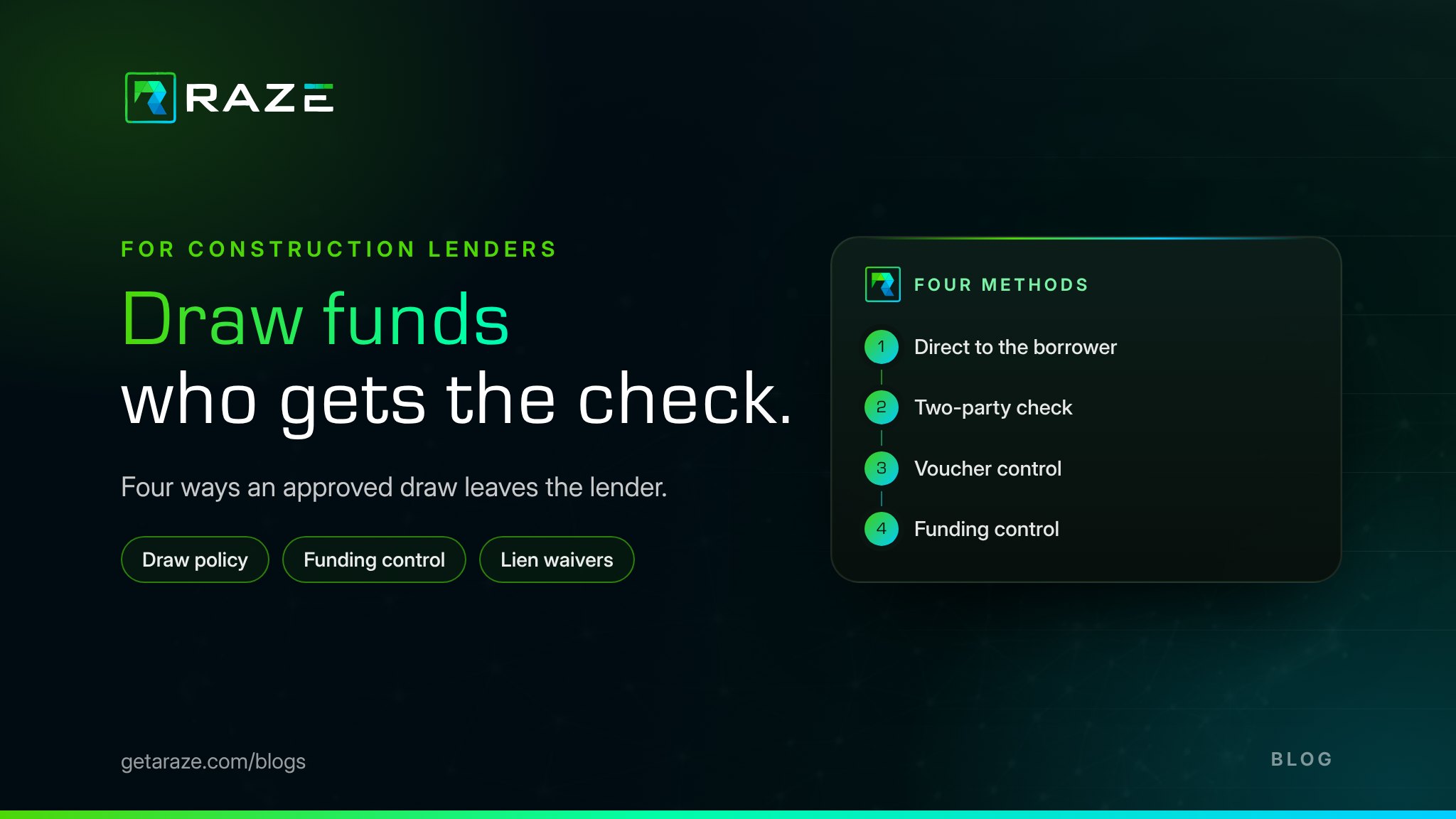
The four methods
| Method | How the money moves | What to weigh |
|---|---|---|
| Direct disbursement | How the money movesThe lender pays the borrower, who then pays the contractors | What to weighSimpler to run, with a higher risk of fund diversion |
| Two-party check | How the money movesA check payable jointly to the borrower and the contractor | What to weighBoth must endorse it, which reduces misapplied funds and adds a step |
| Voucher control | How the money movesContractors submit vouchers for completed work, verified before payment | What to weighEach payment is matched to a claim for work, at the cost of more review |
| Funding control | How the money movesA third party pays contractors and suppliers directly | What to weighPayments go straight to the people owed, and the lender has a party to select and oversee |
Whatever the method, the undisbursed balance usually sits in a loan-in-process account and is drawn down as the lender approves each draw. The method changes who touches the money on the way out. It does not change what the lender has to know before releasing it.
Write the rule before the first advance
Name the method by loan type
Say which method applies to which program, so the answer does not depend on who is at the desk. An owner-builder loan and a loan to an experienced builder may reasonably get different answers.
Say what must be in hand first
List what the file needs before any method pays: the inspection report, the lien waivers the loan agreement calls for, and the title update.
Decide when the method changes
Write the triggers that move a loan to a tighter method: an unsupported draw, an unpaid subcontractor, a lien on the title update or a loan that has fallen out of balance.
Keep the proof of payment
Record who was paid, how much and when, beside the draw it belongs to, so the next reviewer can follow the money without a phone call.
The method is the lender's credit decision.
No method fits every loan. A tighter method costs time and may need a third party the lender has to select and oversee. The loan agreement and state law decide what is allowed, so confirm the policy with counsel.
Where RAZE fits
RAZE documents the work; the lender moves the money. The lender sets the required questions and photos on each order in the Ordering Engine, and the report comes back with every photo carrying GPS coordinates and date and time stamps and linked to the draw sheet line it supports. Each line shows the prior inspection's percent beside the current one, so the amount about to be paid can be read against the work it pays for.
RAZE does not disburse, approve, deny or fund draws, and it does not act as a funding control agent. The report is the evidence the lender holds when it chooses how, and to whom, the advance is paid.
Frequently asked questions
Keep reading
Evidence first, then the advance
See what the reviewer holds before any method pays out.
For Lenders
See a draw inspection on a project in your book, from order to delivered report.
Get StartedKnow the work is there.Then choose who gets paid.
Tie every advance to a report the reviewer can read.
Get Started