Milestone Draws vs. Line-Item Draws for Lenders
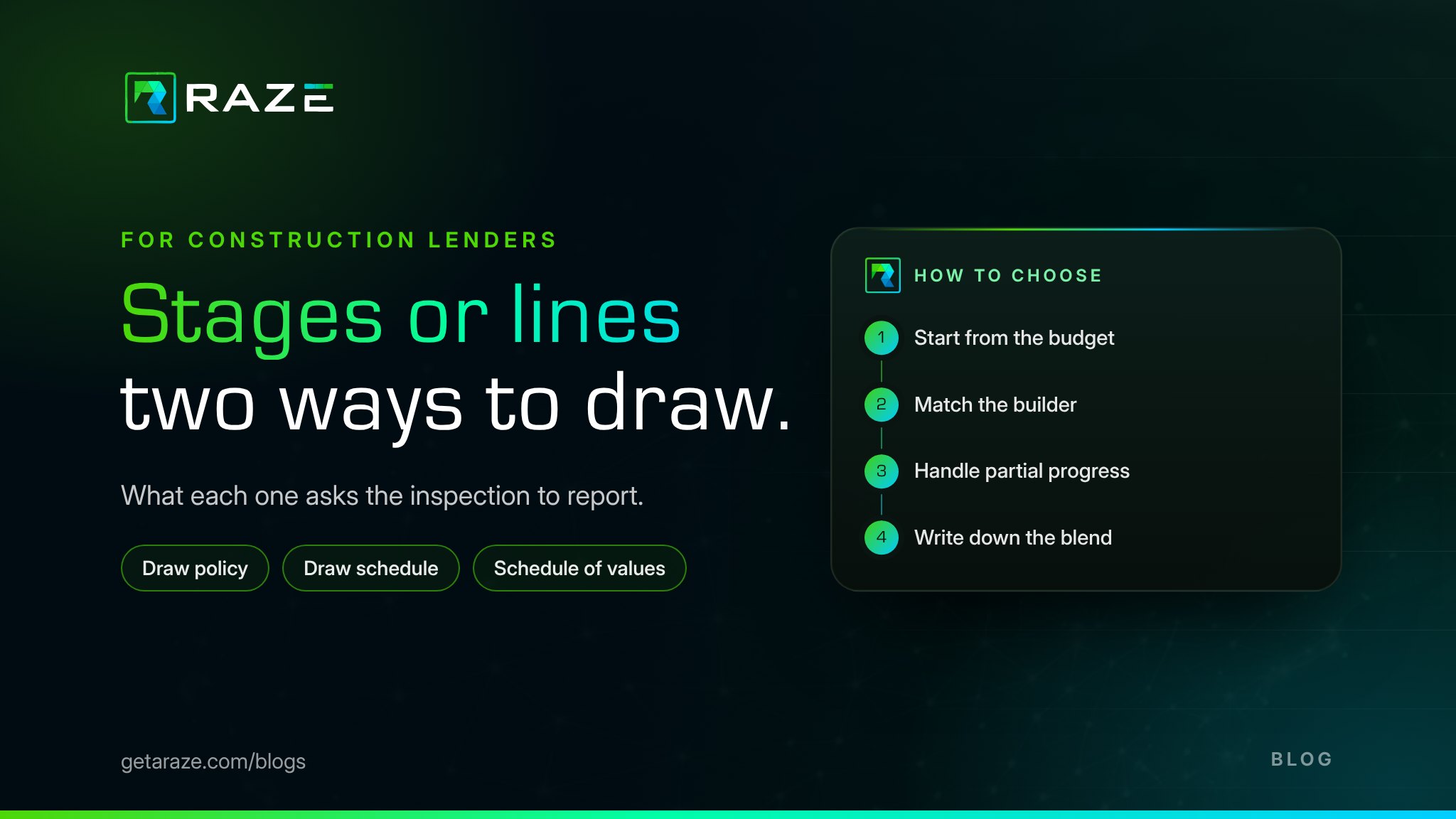
Framing is most of the way up and the builder wants a draw. On one loan the answer is no, because the framing stage is not finished. On another the answer is yes, for the share of the framing line that is in place. The house is the same. The draw schedule is different.
The short definition has its own page: what a draw schedule is. This guide compares the two shapes a schedule can take and how a lender chooses between them. Each lender sets its own policy; nothing here replaces it.
Two shapes for the same loan
A milestone draw schedule is keyed to the completion of defined construction stages, such as foundation, framing and dry-in, and not to a percentage of budget lines. A stage is complete or it is not.
A line-item draw funds against the percent complete of individual budget lines. The budget is broken into a schedule of values, each line with its own scheduled amount, and the inspector reports progress line by line. It offers finer control than milestone draws.
| The question | Milestone draws | Line-item draws |
|---|---|---|
| What triggers a draw | Milestone drawsA defined stage is complete | Line-item drawsProgress on one or more budget lines |
| What the inspector reports | Milestone drawsWhether the stage is done, with the photos that show it | Line-item drawsPercent complete for each line in the request |
| Partial progress | Milestone drawsHard to fund fairly until the stage is done | Line-item drawsCan be funded for the share in place |
| Work at the desk | Milestone drawsSimple to administer and easy for a builder to plan around | Line-item drawsMore detailed inspection and review |
| Where it strains | Milestone drawsA stage that is nearly done is hard to fund fairly | Line-item drawsMany small lines to read on every draw |
How to choose
Start from the budget you have
A line-item schedule needs a budget detailed enough to measure against. If the cost breakdown is a handful of lump sums, milestones may be the workable choice until the budget is rebuilt in lines.
Match the schedule to the builder
A production builder repeating one plan fits milestones well. A custom home, with allowances and change orders, usually funds against a line-item budget.
Decide how partial progress is handled
Under milestones, say whether a stage can ever be funded in part. Under line items, say how percent complete is read and who settles a disagreement.
Write down the blend
Many residential lenders blend the two: milestone draws for the big structural stages and line-item funding for the long tail of finishes. If the policy allows a blend, name which stages use which.
Either shape can be front-loaded.
A schedule that releases too much for early stages, or early lines that are padded, moves risk onto the lender before the work is there. The lender's budget review matters under both methods.
Where RAZE fits
RAZE works from the lender's schedule, whichever shape it takes. The required photos, observations and completion fields for each stage are configured in the Ordering Engine and captured in the Mobile App. The report comes back by line item, with each photo linked to the draw sheet line it supports and the prior inspection's percent beside the current one, so a reviewer can read progress against the schedule and not against the builder's description of it.
The lender reviews the report, applies its schedule and decides what to fund. RAZE does not approve, deny or fund draws.
Frequently asked questions
Keep reading
One report, either schedule
See progress by line item, with photos tied to each line.
For Lenders
See a draw inspection on a project in your book, from order to delivered report.
Get StartedPick the shape.Read every draw against it.
Get the same report on either schedule.
Get Started