On site
The inspector photographs the materials, compares counts, labels and model numbers with the invoice, and notes how they are protected from weather and theft.
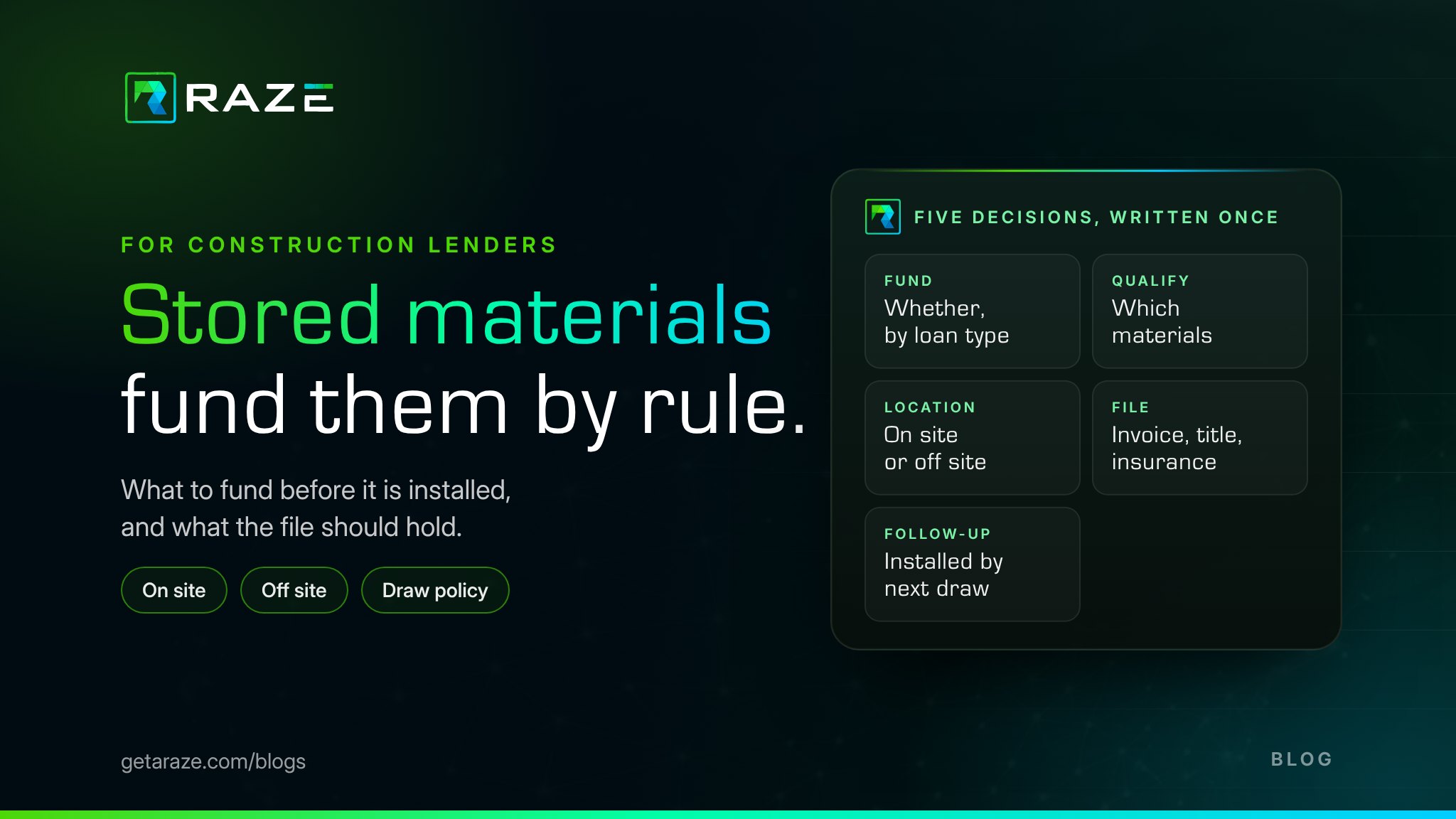
A draw request lists windows that are sitting in crates on the lot, or cabinets that are finished and waiting at the shop. The money is spent and the materials are real, but nothing is installed. Whether that line funds is a policy question, and a desk that has no written rule answers it differently every time.
The short questions have their own pages: what stored materials are and how they are verified. This guide covers the rule a lender writes down before the request arrives. Nothing here is legal advice. Title to materials and lien rights depend on the loan documents and state law, so confirm them with counsel.
Every other line on a draw sheet is funded against work an inspector can photograph in place. A stored materials line is funded against something that can still be damaged, stolen, moved to another job or never installed. The NCUA's examiner's guide reminds credit unions that collateral value on a construction loan is created only as the improvements go in, so disbursements have to track real progress. Materials billed but not installed also sit on the list of construction draw red flags because they are the easiest way for funding to run ahead of the work.
None of that means a lender should refuse them. Materials such as windows and cabinets are often paid for before they are installed. The policy decides whether the lender funds them at that point and what it asks for in return.
Some lenders fund installed work only. Others fund stored materials when the loan agreement allows it. Say which, by loan type, so the answer does not depend on who is at the desk.
Name the kinds of materials the lender will fund before installation, and whether any cap applies to a single draw or to the loan. Any limit is the lender's own credit decision.
On site, off site or both. Lenders that fund off-site storage usually ask for a location approved in writing, with the materials kept apart and labeled for the project.
The documents below, collected before the line funds and kept with the draw.
Materials funded last time should be installed this time. Write down who checks, and what the desk does when they are not.
Paperwork does the job an installed wall would otherwise do. A lender that funds stored materials usually asks for the invoice or bill of sale, with quantities and model or lot numbers; proof that the materials are paid for and belong to the borrower or contractor; a supplier lien waiver where the loan agreement calls for one; and insurance that covers the materials where they sit. The lien waivers guide covers where the waiver fits beside the inspection.
On the pay application, the AIA G703 continuation sheet carries materials presently stored in their own column, as its instructions describe, so the request itself shows how much is for materials not yet in place. A simpler residential draw sheet can do the same with a separate line. Ask for it: a stored materials amount folded into a percent complete figure cannot be checked.
The inspector photographs the materials, compares counts, labels and model numbers with the invoice, and notes how they are protected from weather and theft.
Harder to verify, so lenders ask for more: a storage agreement, an approved location, insurance at that location and often an inspection there. Some decline until delivery.
Ask for the same set either way: the materials, their counts, labels and model numbers, how they are protected and where they are kept.
Who owns materials held at a supplier and how an unpaid supplier's lien rights work are set by the documents and state law. Confirm them with counsel before the policy is final.
Verification does not end when the line funds. The next inspection should show last draw's stored materials installed, and the report should let a reviewer see that without a phone call. When the windows funded in March are still in crates in May, or are no longer on the lot, the desk is looking at an inspection that shows less work than requested, and the unsupported draw guide covers the outcomes. Put the check in the draw inspection policy so it happens on every loan, not only when someone remembers.
RAZE documents; the lender decides. The lender sets the required questions and photos on each order in the Ordering Engine, so a draw that includes stored materials can require photos of the materials, their labels and where they are kept. A RAZE report can document stored materials kept on site or off site. Every photo carries GPS coordinates and date and time stamps and links to the draw sheet line it supports, and each line shows the prior inspection's percent beside the current one, so the next visit shows whether the materials went in.
The report is the same whether RAZE sends the inspector through Marketplace or the lender sends its own through Direct Request. The lender reviews the paperwork, applies its policy and decides what to fund. RAZE does not approve, deny or fund draws.
Set the required photos on the order and tie each one to its draw sheet line.
See a draw inspection on a project in your book, from order to delivered report.
Request a DemoRequire the stored materials photos on every order.
Request a Demo