Before approval
The inspector notes work that differs from the approved scope. The lender decides whether to approve a change order for it.
A borrower upgrades the kitchen in month four. The builder does the work, bills it on the next draw, and the request no longer matches the budget the lender approved. Nothing dishonest happened. The change was simply never put in front of the lender.
A change order is a documented modification to the contract's scope, price or schedule, signed by both parties. This guide covers what a construction lender does with one: when it is approved, how it reaches the budget, and what the draw inspection shows before and after. Nothing here is legal advice. What a loan agreement requires for a change is set by the documents, so confirm it with counsel.
A draw is read against a budget. When a change order moves work between lines and was never approved, the request and the budget no longer match, and the reviewer cannot tell a real overrun from a relabeled line. That mismatch is one of the common reasons a draw inspection shows less work than requested.
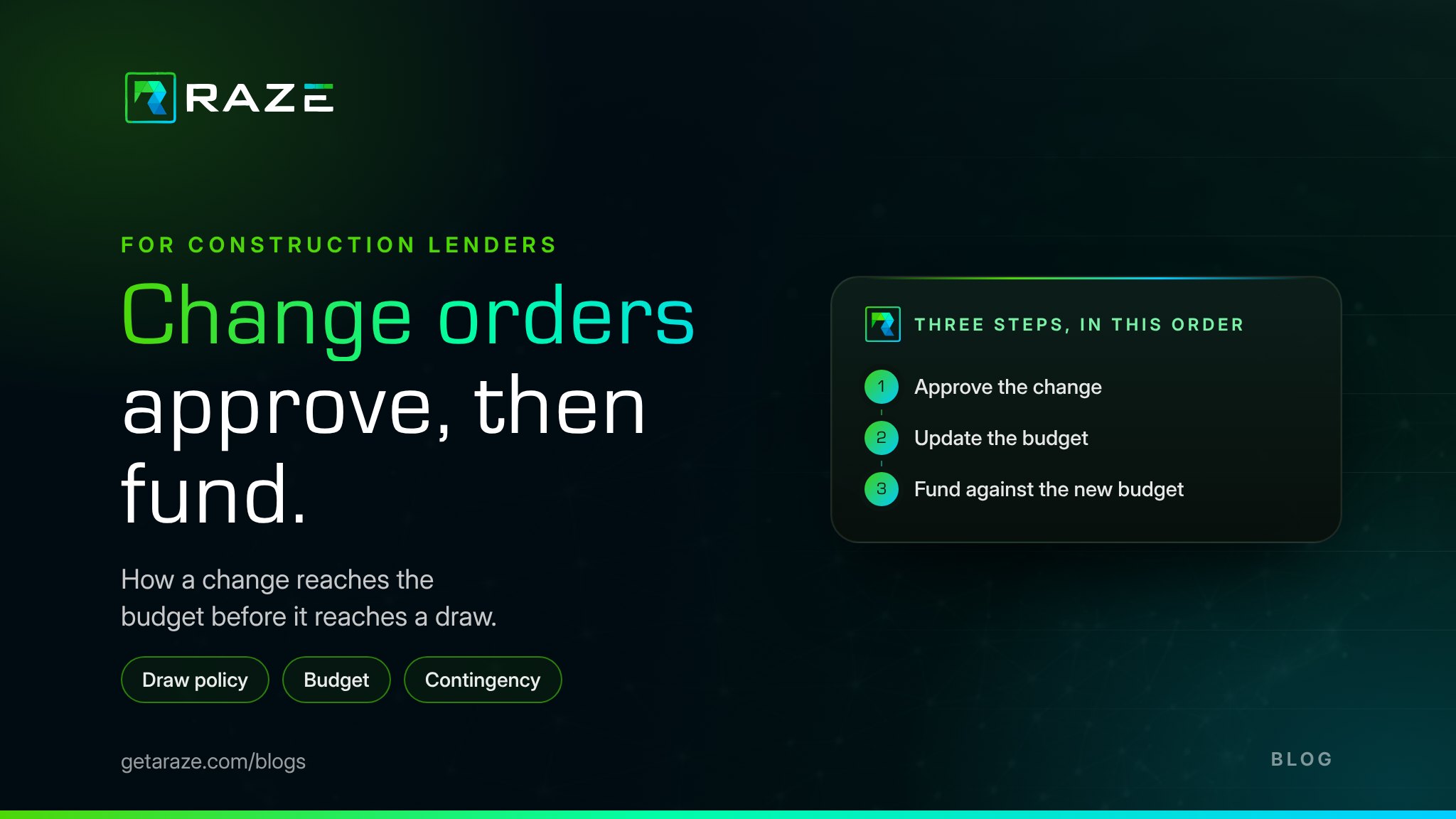
The fix is a sequence: the change is approved first, folded into the budget second and funded third. Changed work is funded after its change order is approved, not before.
A change order is signed by both parties. The lender decides whether to approve it, and the lender's policy says who signs off and when.
Approved change orders are folded into the budget before percentages are assessed, so every later draw is read against the budget as it now stands.
The next request follows the updated lines. Work under a change that is not approved is noted as an exception, not counted as progress.
A change order that adds cost has to be paid for. The contingency reserve exists for cost the plans could not foresee, and a change the borrower wants is one of the things it can cover when the lender allows it. A contingency release is a draw like any other, and the inspection documents the condition behind it.
When the reserve is not enough, the loan has to stay in balance: undisbursed loan funds plus borrower equity must still be enough to finish the project, and a shortfall is the borrower's to cure. The loan balancing and cost to complete pages cover that test. Count the change orders the lender has approved and any overrun already known.
The inspector notes work that differs from the approved scope. The lender decides whether to approve a change order for it.
The changed work is assessed against the updated budget line, with photos, like any other line on the draw sheet.
A large change order is one of the events that can justify an extra visit outside the regular draw cycle.
Whether a change needs the lender's written consent, a revised budget or added equity is set by the loan agreement and state law. Confirm it with counsel.
The draw inspection policy is where the rule lives. Say who approves a change order, what the borrower sends with it, when the budget is updated and what the desk does with a request that bills unapproved work. When that request arrives, the usual outcome is to ask the borrower to resubmit against the actual progress or to document an approved change order; the unsupported draw guide covers the rest. Work that differs from the plans is one of the flags in the construction draw red flags guide.
RAZE documents; the lender decides. In a RAZE report every photo links to the draw sheet line item it supports and carries GPS coordinates and date and time stamps, and each line shows the prior inspection's percent beside the current one. A reviewer can see which lines moved and read each one against its own photos. The lender sets the required questions and photos on each order in the Ordering Engine, so a draw that follows a change order can ask for the changed work specifically.
The report is the same whether RAZE sends the inspector through Marketplace or the lender sends its own through Direct Request. RAZE does not approve change orders, and it does not approve, deny or fund draws.
See each line's prior and current percent beside the photos that support it.
See a draw inspection on a project in your book, from order to delivered report.
Get StartedEight answers on discrepancies, reinspections, delays and partial draws.
Read the FAQsRead every draw against the current budget.
Get Started