Dispute with evidence
Argue the lines, not the inspector: each line, the percent the work supports, dated photos, invoices and delivery tickets for materials, and the approved change order if the budget moved.
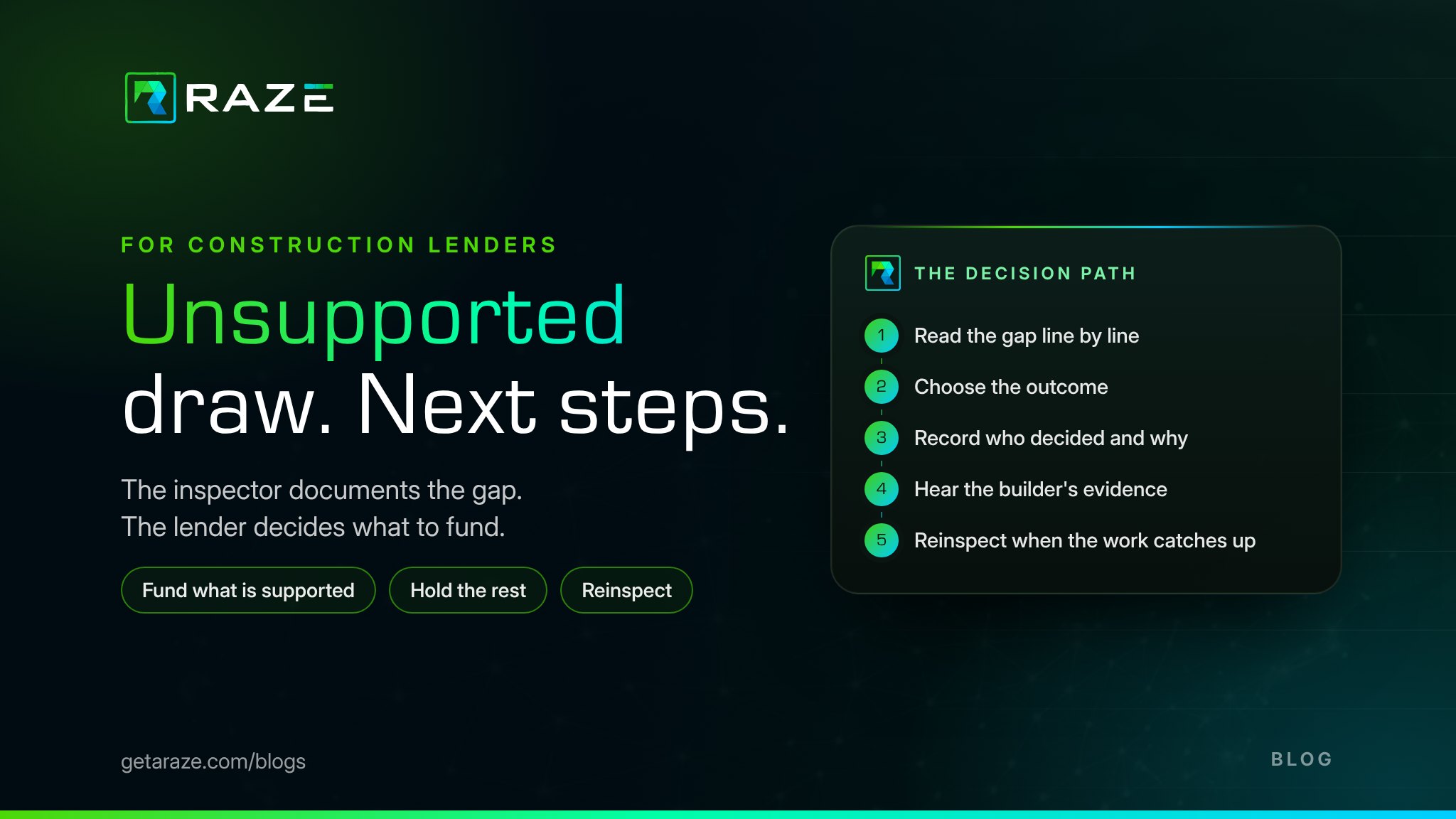
A draw inspection comes back and the percentages do not match the request. The builder wants the money, the loan officer wants the project moving, and the report says the work is not there yet. The short question, what happens when an inspection shows less work than requested, has its own answer. This guide covers the decision that follows it: how a lender reads the gap, the outcomes it can choose, what the file shows, and how a builder makes its case.
One rule holds throughout: the inspector documents; the lender decides. Nothing here is legal advice. Where a lien or contract question comes up, confirm it with counsel.
A draw sheet gives each budget line a prior percent, a requested percent and the percent the inspector found. The gap lives in those lines, not in the total, and the pattern across them points to a cause: a request timed to payroll, a front-loaded budget, materials billed before they arrived, or a site that has stopped. The construction draw red flags guide covers those patterns and what to ask about each.
Stored materials are the most common disagreement, and the stored materials answer explains what a lender usually wants to see before a line counts. Read the gap as lines before deciding anything about the draw as a whole.
Release the lines the report supports and carry the rest to the next draw. It keeps the loan balance behind the work in place.
Where the loan agreement allows it, fund a line at the percent the inspector found rather than the percent requested. The request is resized to the record, not refused.
When the gap runs across every line, hold the draw and write down what has to be true before it is reconsidered.
When an unapproved change order or a line billed against the wrong scope has put the request out of step with the budget, send it back for a request that follows the current budget.
When the builder says the work finished after the visit, or a room could not be reached, a new visit settles it with new photos. The original report stays on the record beside the new one.
Each outcome needs a record an examiner can read without asking. The FDIC's construction and land development examination procedures (updated October 2025) ask whether disbursements are made only after management reviews written inspection reports, lien searches and title updates, whether inspections happen on an irregular schedule and before draw requests, and whether the inspectors' work is spot-checked. The OCC's Comptroller's Handbook on commercial real estate lending lists site inspections, lien searches before disbursement, budget monitoring and dual approval of disbursements among its controls, and describes front loading, a builder overstating the cost of early-stage work, as a problem to catch early. The NCUA's examiner's guide says a credit union releases funds only after on-site inspections documented in a written report, and treats a deviation from the construction budget and schedule as something that can add cost and affect the project's feasibility.
For an unsupported draw, the file holds the request, the report with its photos, the lines that were short, the outcome, who approved it and when, and any reinspection beside the first report.
The builder's path runs through the lender, not the inspector. Can a builder dispute a draw inspection report? covers what moves a lender; these rows are the builder's working order.
Argue the lines, not the inspector: each line, the percent the work supports, dated photos, invoices and delivery tickets for materials, and the approved change order if the budget moved.
A new visit photographs the site as it stands that day. Work finished since the first visit shows up; work that was never there does not.
A held draw delays the next one. Resize the request to the work in place, take the supported lines now and put the disputed lines on the next draw instead of stopping the project over them.
Whether an unpaid subcontractor can lien the property, what the loan agreement allows for stored materials or partial draws, and who pays for a reinspection are set by the documents and state law. Confirm them with counsel.
A desk that meets an unsupported draw for the first time improvises, and improvised outcomes are the ones an examiner questions. The draw inspection policy guide covers the whole document; its exceptions section is where these outcomes belong. Name the outcomes the lender allows, when each applies, who approves a hold or a partial draw, how the builder's evidence is received and who orders a reinspection. The reviewer then applies a rule, the loan officer explains it to the builder in the same words, and the file shows it was followed. The unsupported construction draw FAQs answer the short questions a borrower or a new reviewer asks.
RAZE documents; the lender decides. In a RAZE report every photo links to the draw sheet line item it supports and carries GPS coordinates and date and time stamps, and each line shows the prior inspection's percent beside the current one, so a gap can be read line by line against its own evidence. Each inspection keeps a history of its status changes and who made them.
When the reviewer needs more, rejecting the submitted inspection in the Ordering Engine sets it to Lender Rejected with the reviewer's reason attached and notifies the inspector, who reopens it in the Inspector Portal, fixes what was flagged and resubmits; every status change stays on the record. The reviewer accepts or rejects each submitted inspection unless the institution has turned on auto-approve, a workflow setting rather than an AI decision. Whether the lender sends its own inspector through Direct Request or RAZE sends one through Marketplace, the report follows the same standard. RAZE does not approve, deny or fund draws.
Photos tied to each line, prior and current percent, and a status history.
See a draw inspection on a project in your book, from order to delivered report.
Request a DemoEight answers on discrepancies, reinspections, delays and partial draws.
Read the FAQsRead every gap against its own photos.
Request a Demo