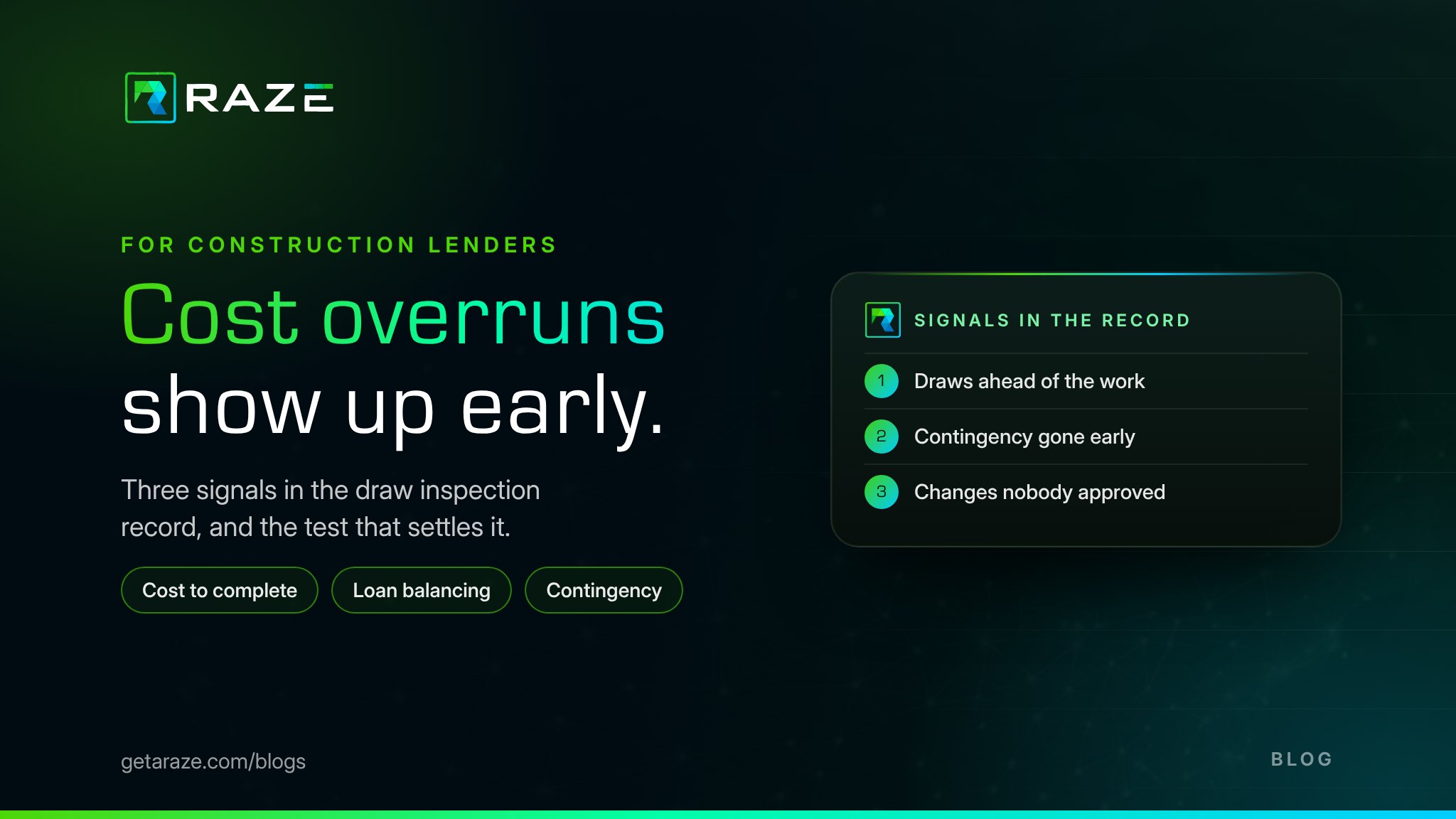
Draws ahead of the work
A project that is 50 percent drawn and 40 percent built has a gap that only grows if nothing changes. The line-by-line percent in each report shows it.
A cost overrun rarely arrives as an announcement. It arrives as a draw that is a little larger than the work in place, a contingency line that empties early, or a change order nobody sent to the lender. The earlier the imbalance shows, the cheaper the cure.
This guide covers how a lender reads an overrun in the draw inspection record while there is still time to act. The definitions have their own pages: cost to complete, loan balancing and the contingency reserve. Nothing here is legal advice. What a lender may require when a loan goes out of balance is set by the loan documents, so confirm it with counsel.
Undisbursed funds plus remaining borrower equity must be at least the cost to complete. The loan balancing page explains the test, and the administrator runs it before every disbursement, not once at closing.
The inspection supplies the field half. An inspector who marks framing at 80 percent when it is at 60 understates the cost to complete by the difference, and the loan looks healthier than it is until the next visit.
A project that is 50 percent drawn and 40 percent built has a gap that only grows if nothing changes. The line-by-line percent in each report shows it.
A contingency drained in the first third of the project is an early warning that the rest of the budget is tight.
Work that differs from the approved scope is noted by the inspector, and the lender decides whether to approve a change order.
Start from the approved budget, subtract the value of work in place on each line, and add the approved change orders and any overrun already known.
Set that figure beside the undisbursed balance and the borrower's remaining equity. The loan is either in balance or it is not.
A loan that goes out of balance late is funded by someone: the borrower, if they have the cash, or the lender, through an increase, an extension or a loss. The loan agreement says how the difference is covered, and the lender decides within it.
Approve or decline the open change orders, so the next draw is read against the budget as it now stands.
Whether the lender can hold a draw, require more equity or change the loan when it is out of balance is set by the loan agreement and state law. Confirm it with counsel.
The earlier the imbalance shows, the cheaper the cure. A report that confirms less work than the request claims moves the cost to complete up and can tip the loan out of balance before the draw is funded, which is the point at which the lender still has options. The OCC's Commercial Real Estate Lending handbook treats the cost-to-complete analysis as part of sound construction loan monitoring.
When work has slowed as well, the stalled construction loan guide covers what to document, and the change orders guide covers what to approve before funding. Custom homes carry their own version of the problem in allowances; see custom home construction loan draws.
RAZE documents; the lender decides. RAZE reports percent complete by budget line item with photos tied to each line, so the administrator's balancing math rests on documented work in place rather than on the request. Each line shows the prior inspection's percent beside the current one, and every photo carries GPS coordinates and date and time stamps. RAZE documents rework and change-order work at each visit as well.
The balancing decision, and any cure, stays with the lender. RAZE does not approve, deny or fund draws.
Read each line's prior and current percent beside the photos that support it.
See a draw inspection on a project in your book, from order to delivered report.
Get StartedEight answers on discrepancies, reinspections, delays and partial draws.
Read the FAQsRead cost to complete against documented work.
Get Started