Fixed-Price vs. Cost-Plus Contracts at the Draw Desk
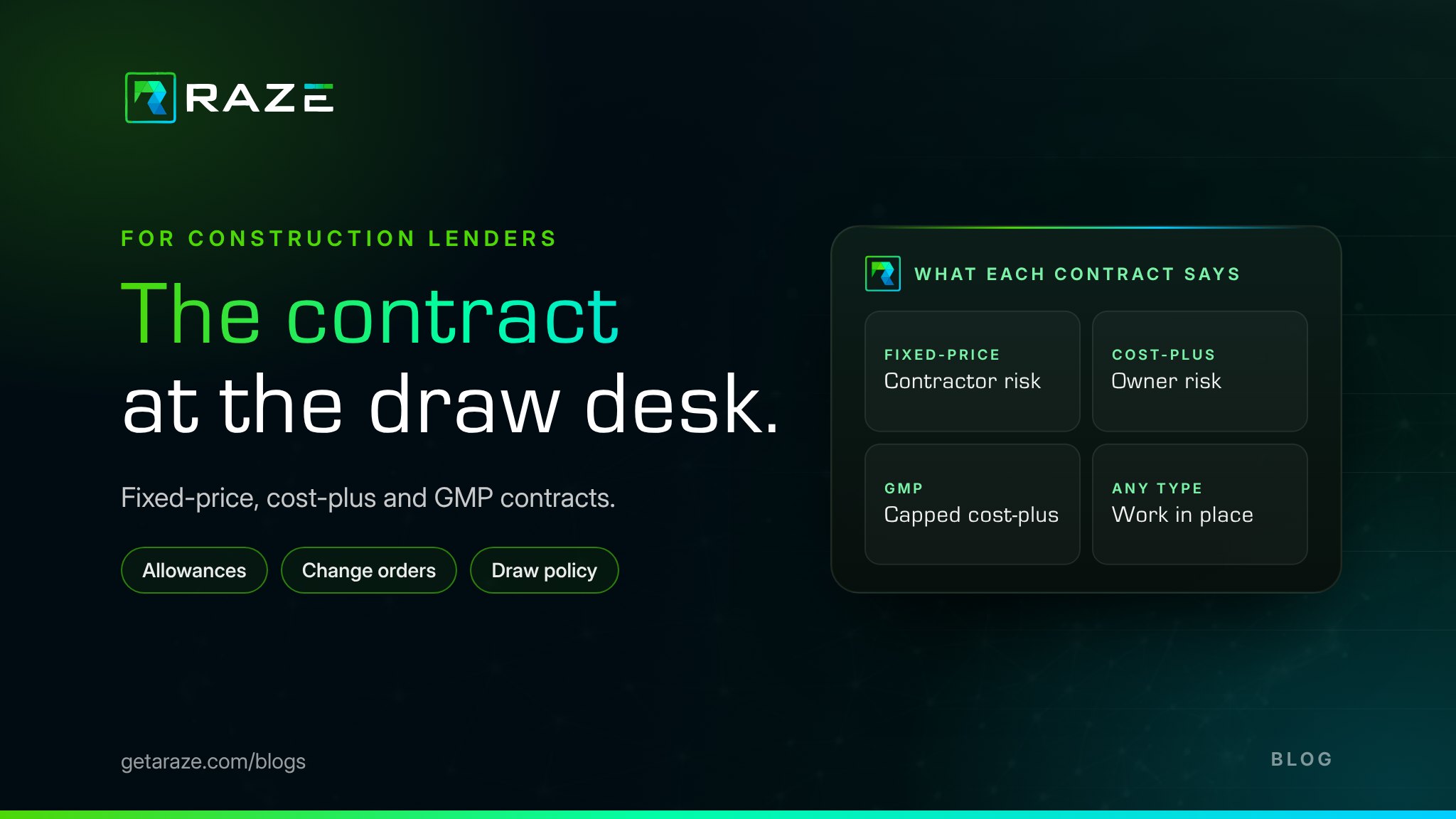
Lumber costs more than the builder priced it. On one loan that is the builder's problem. On another it lands on the owner. The difference is one page in the file: the construction contract.
This guide covers the three contract types a draw desk meets and what each changes about reading a draw. It does not advise which contract a lender should require. The contract and the loan documents govern; nothing here is legal advice.
Three contracts, three answers
| The contract | What it is | What the definition says about cost |
|---|---|---|
| Fixed-price | What it isA contract at a set total price | What the definition says about costOverrun risk on the contractor |
| Cost-plus | What it isA contract paying actual costs plus a fee | What the definition says about costOverrun risk on the owner |
| Guaranteed maximum price (GMP) | What it isA cost-plus contract capped at a maximum | What the definition says about costCosts capped at a maximum |
Under any of the three, the inspection documents work in place. The steps below cover what sits beside the inspection report.
What the draw file shows under each
Note the contract type in the file
A file that names the contract type tells every reviewer where a cost overrun lands before one appears.
Read the allowances
An allowance is a budget placeholder for unselected items, such as flooring. Actual selections reconcile against it. The custom home guide covers how allowances move a draw.
Read every change as a change order
A change order is a documented modification to the contract's scope, price or schedule, signed by both parties. The change orders guide covers the order: approved, then budgeted, then funded.
Recheck the cost to finish when costs move
When a cost rises, compare cost-to-complete with the funds left to finish. The cost overruns guide covers what the file shows.
The contract answers who carries the overrun.
This guide describes the three contract types. It does not recommend one, and it does not say how a shortfall on a loan is covered. The loan documents and counsel decide that.
Where RAZE fits
RAZE documents the work; the lender decides what to fund. The lender sets the required questions and photos on each order in the Ordering Engine. The report comes back by line item, with each photo carrying GPS coordinates and date and time stamps and linked to the draw sheet line it supports. Each line shows the prior inspection's percent beside the current one.
RAZE does not approve, deny or fund draws.
Frequently asked questions
Keep reading
Construction loan change orders
What lenders approve, and in what order.
Construction loan cost overruns
Three signals in the draw inspection record.
Custom home draws vs. production builds
Allowances, change orders and stage standards.
How to write a draw inspection policy
The policy this choice belongs in.
The same evidence under any contract
See progress by line item, with photos tied to each line.
For Lenders
See a draw inspection on a project in your book, from order to delivered report.
Get StartedThe contract says who carries the cost.The report shows the work in place.
Read every draw against the work in place.
Get Started