Date-Down Endorsements on Construction Loan Draws
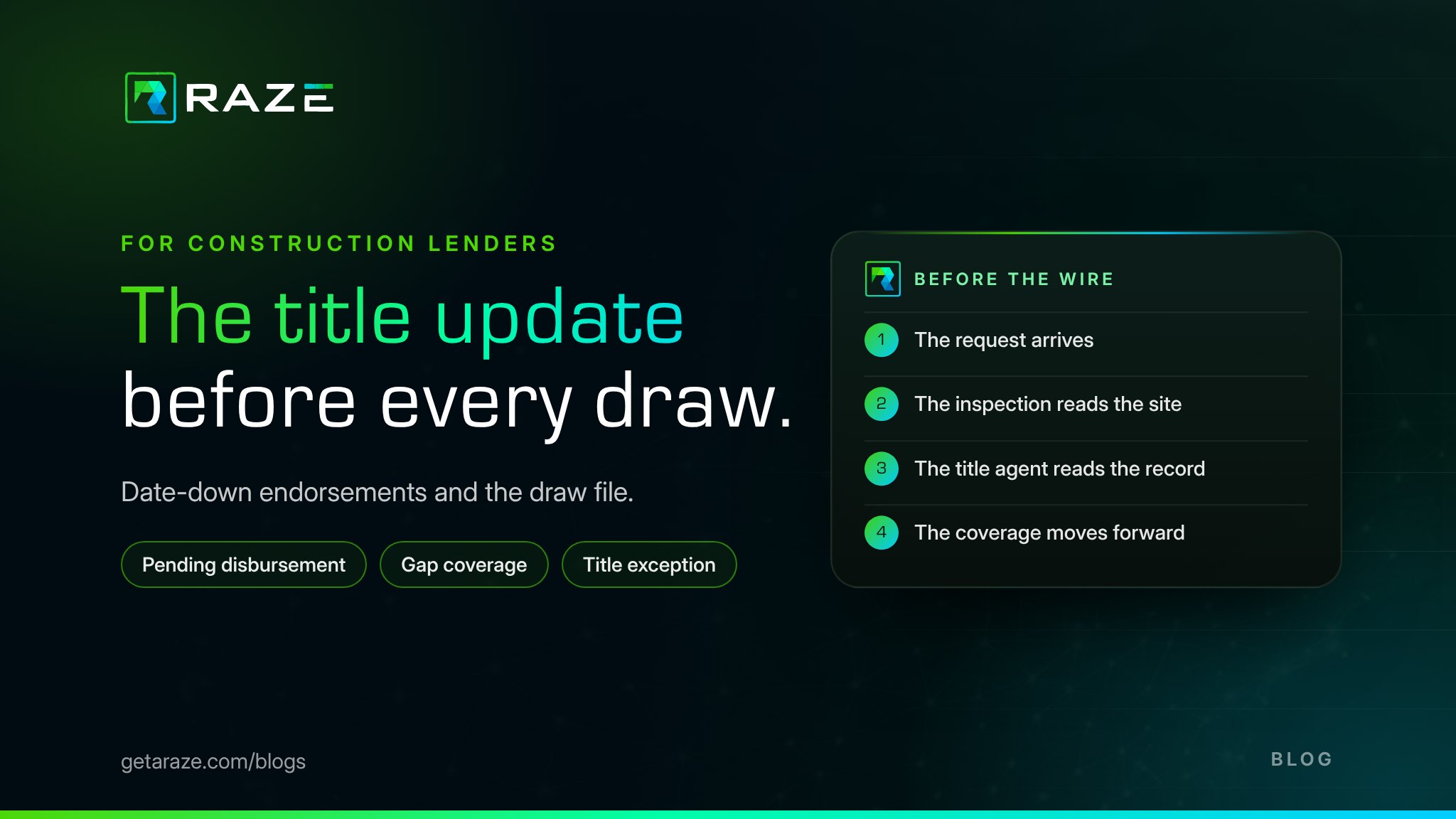
The inspection report on the fourth draw is clean. The framing is up and the photos match the draw sheet. Two weeks earlier, an unpaid supplier recorded a lien against the property. The inspection cannot show that, because it is not on the site. It is in the public record.
A title update, also called a date-down endorsement, is a title search refresh before each draw confirming no new liens have attached since the last disbursement. This guide covers the terms behind it and where it sits in a draw. RAZE does not search or insure title. The title agent and the title policy govern every point below.
Five terms in the title file
| The term | What it is | The detail that matters |
|---|---|---|
| Title insurance | What it isA policy protecting the lender or owner against defects in title, such as unknown liens or ownership disputes | The detail that mattersIt insures the lender's lien as of closing |
| Title update / date-down endorsement | What it isA title search refresh before each draw | The detail that mattersConfirms no new liens have attached since the last disbursement |
| Pending disbursement clause | What it isA title policy provision limiting coverage to funds actually disbursed | The detail that mattersCoverage increases as draws are advanced |
| Gap coverage | What it isTitle protection for the period between closing and recording | The detail that mattersNew matters could attach to title in that window |
| Title exception | What it isA matter excluded from title coverage | The detail that mattersEasements, restrictions or existing liens |
Read the pending disbursement clause and the date-down together. Under that clause, coverage reaches only the money already advanced. Each date-down is the step that lets the insurer bring the coverage date forward to the next advance. The live answer, what a title update is on a construction draw, covers the search itself and the standard ALTA disbursement endorsement.
Where the date-down sits in a draw
The draw request arrives
A draw request is a formal application for a portion of the loan funds, itemized against the approved budget. Two checks follow it, and they answer different questions.
The inspection documents the work
The draw inspection shows whether the work being paid for is in place on the site. It records percent complete by line item with photographs.
The title agent searches the record
The title update searches the public record from the last date covered to the present. It shows whether a lien, judgment or other claim was recorded since the last draw.
The coverage moves forward
If nothing new was recorded, the insurer issues an endorsement that brings the coverage date forward. What a new matter means for the advance is for the lender, the title agent and counsel to decide.
The lender decides what funds
The file now holds both records for the same advance. Lien waivers are the third piece; the lien waivers guide covers them.
This is not title or legal advice.
Which endorsement applies, how often to date down and what it covers are set by the lender's policy, the title insurer and the state. Confirm each loan with your title company and counsel.
What to write into the draw policy
A draw inspection policy that names the inspection should name the title step beside it. Write down who orders the date-down, on which loans and at which draws, and that no advance funds until both records are in the file. The FDIC's construction and land development procedures check that disbursements are made only after management reviews written inspection reports, lien searches and title updates. The title update fee is one of the lines on a draw; the draw fees guide lists it with the others.
Lien priority is why the title step comes before the wire. The NCUA's examiner's guide notes that state law can let a mechanic's lien take priority over later advances, and the rules differ by state. The lien priority guide covers what a first inspection puts in the file before money moves.
Where RAZE fits
RAZE documents the work; the lender decides what to fund. RAZE does not search title or issue endorsements; that work stays with the lender's title agent or insurer.
RAZE supplies the inspection side of the same draw. Each photo carries GPS coordinates and date and time stamps and is linked to the draw sheet line it supports, so the file shows what was on site and when, beside the title update for the same advance. RAZE does not approve, deny or fund draws.
Frequently asked questions
Keep reading
Two records for every advance
The title update covers the record; the inspection covers the site.
For Lenders
See a draw inspection on a project in your book, from order to delivered report.
Get StartedThe title update reads the record.The inspection reads the site.
Read every draw against the work in place.
Get Started