Substantial Completion vs. Final Completion
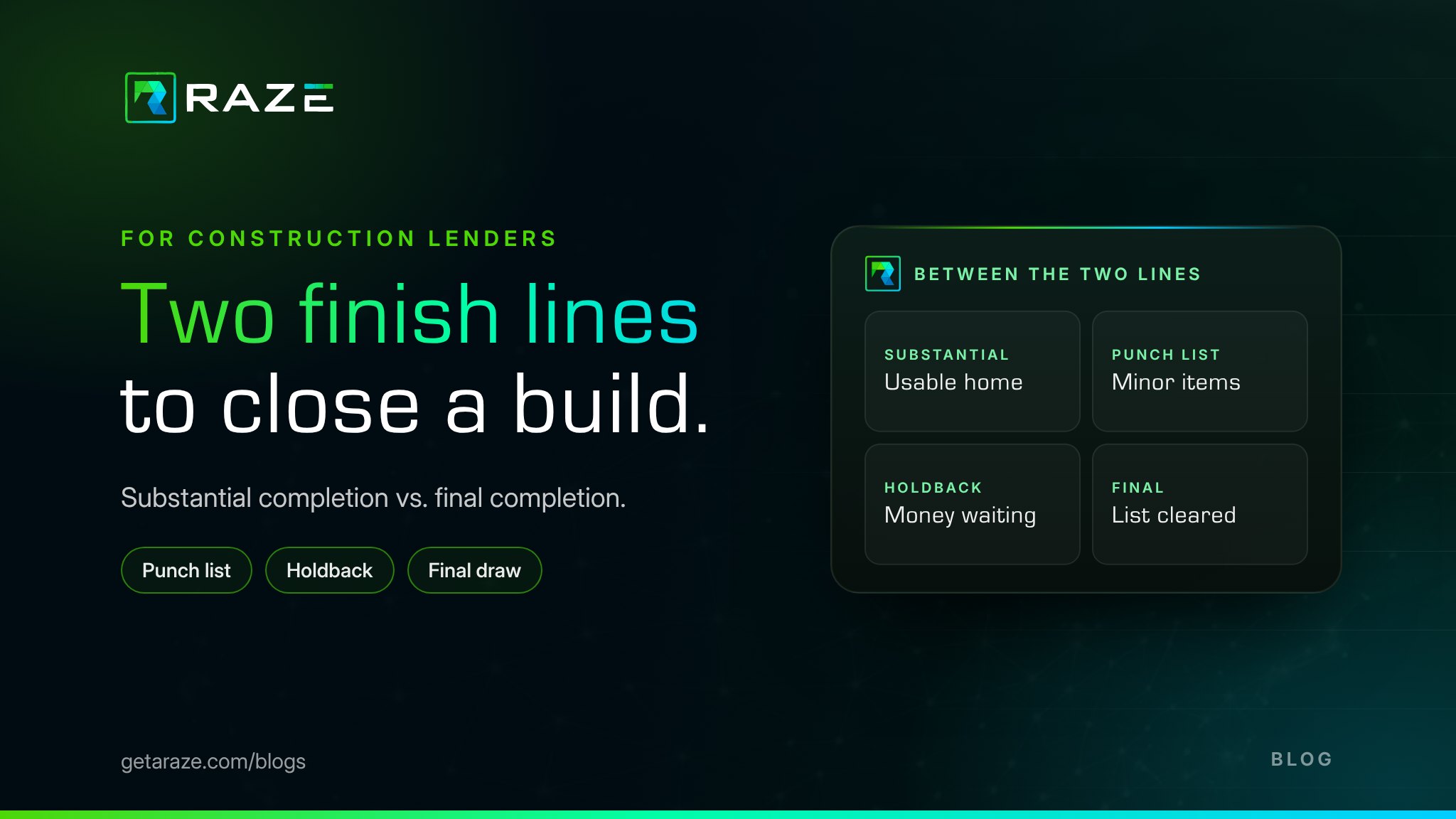
The house is usable. The painter still owes touch-ups, and one downspout is not connected. Is the house finished? A build has two finish lines, and the last money on the loan sits between them.
This guide covers the terms a draw desk meets at the end of a build. It adds no legal definition: the contract and the loan documents say what each milestone means on a given loan. Nothing here is legal advice.
The terms at the end of a build
| The term | What it is | What it does to money |
|---|---|---|
| Substantial completion | What it isThe project is usable for its intended purpose despite minor remaining items | What it does to moneyTriggers warranty and payment milestones |
| Punch list | What it isThe list of minor defects and unfinished items | What it does to moneyCorrected before final completion and payment |
| Holdback | What it isA portion of a draw or the total loan retained by the lender | What it does to moneyHeld until conditions are met, such as final inspection or lien releases |
| Completion escrow | What it isFunds withheld at closing or conversion to cover minor unfinished items | What it does to moneyReleased when the work is verified complete |
A temporary certificate of occupancy sits on the same stretch of the job: conditional permission to occupy while minor items are completed. The certificate of occupancy page covers the full certificate.
What the policy writes down
Use the contract's words
The contract and the loan documents say what each milestone means. A policy that uses the same words keeps every reviewer reading the same finish line.
Record the open items
The final draw inspection records the open punch items with a photo of each. The punch list page covers the walk that produces the list.
Say what money waits
Some lenders fund the final draw with an amount held back for the open items. Others wait until the list is closed. What is a construction holdback? covers the hold itself.
Confirm the corrections
A re-inspection confirms the items closed and photographs the corrections. The final draw guide covers what to collect before the last disbursement.
The documents define the milestones.
This guide describes the terms. It does not say when a given house has reached either milestone or what a lender must hold. The contract, the loan documents and counsel decide that.
Where RAZE fits
RAZE documents the work; the lender decides what to fund. A RAZE final inspection documents each open item with a photo tied to its line, and the re-inspection documents the correction. The lender decides when the hold is released.
Each photo carries GPS coordinates and date and time stamps. RAZE does not approve, deny or fund draws, and it does not decide when a project has reached either milestone.
Frequently asked questions
Keep reading
Every open item, with a photo
See progress by line item, with photos tied to each line.
For Lenders
See a draw inspection on a project in your book, from order to delivered report.
Get StartedUsable is one finish line. Finished is the other.The report shows what is still open.
Read every draw against the work in place.
Get Started