Land Development Loan Draws: Horizontal First
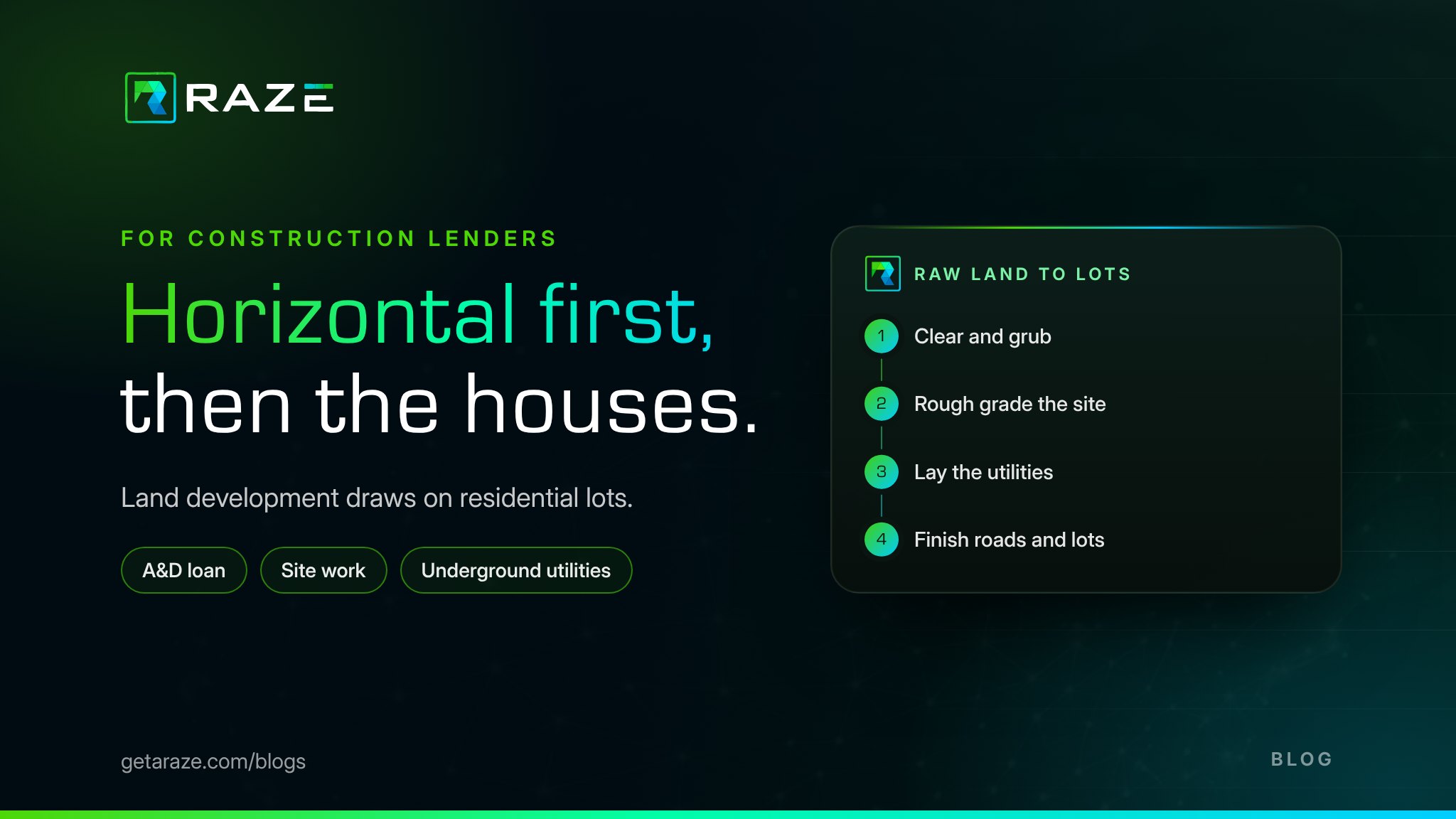
A residential subdivision starts as raw land. Before the first house goes up, the site needs clearing, grading, roads and utilities. Much of that work ends up underground, and the lender funds it before anyone can see a home.
An acquisition and development (A&D) loan is financing for land purchase plus horizontal improvements (grading, roads and utilities) to create buildable lots. This guide covers the residential lot stages and what a draw record shows at each. It makes no claim about how a lender sizes or releases a development loan; the loan documents decide that.
Horizontal and vertical
| The term | What it is | Where it sits |
|---|---|---|
| Horizontal development | What it isSite improvements such as grading, roads, drainage and utilities | Where it sitsPrepares raw land for vertical construction |
| Vertical construction | What it isThe building phase above the foundation, the structure itself | Where it sitsDistinguished from horizontal site development |
| Lot loan | What it isFinancing for the purchase of land intended for future construction | Where it sitsOften refinanced into the construction loan |
| Site work | What it isPreparatory groundwork before building begins | Where it sitsClearing, grading, excavation, temporary utilities and access roads |
The two phases can sit in different loans. An A&D loan funds the horizontal work that creates the lots. A construction loan, sometimes refinanced from a lot loan, funds the house on one of them.
The horizontal stages, in order
Clearing and grubbing
Clearing and grubbing removes trees, stumps, brush and debris from the building site before grading. The record shows the cleared area against the site plan.
Rough grading
Rough grading is the initial earthmoving that brings the site to approximate elevations before construction. The record shows the shaped ground against the site plan.
Underground utilities
Underground utilities are the water, sewer, electric and gas services trenched and installed below grade during site work. This is the stage that disappears: once a trench is backfilled, a later visit cannot see what went in it.
Compaction
Compaction mechanically densifies soil or fill so it can support loads without settling. A draw inspection records the graded area as it looked on the date of the visit; it does not test or certify compaction.
Roads and finished lots
This stage builds the roads, drainage and lots the A&D loan exists to create. From here, each house starts its own vertical draw schedule.
Time the visit to the trench.
Buried work can only be photographed while it is open. A draw policy for development loans should say when an inspection is ordered relative to backfill.
Where the vertical draws pick up
Once a lot is finished, the house on it follows the ordinary draw stages, starting with site work and the foundation. The draw inspection checklist covers those stages, and the foundation draw guide covers the work that goes under the slab. One builder can carry several houses on one credit facility; the builder line of credit guide covers that structure.
Where RAZE fits
RAZE documents the work; the lender decides what to fund. A draw inspection is not an engineering or soil report. It is a dated record of what is visible on the site.
Each photo carries GPS coordinates and date and time stamps and is linked to the draw sheet line it supports. RAZE does not approve, deny or fund draws.
Frequently asked questions
Keep reading
A record of the work that gets buried
See progress by line item, with photos tied to each line.
For Lenders
See a draw inspection on a project in your book, from order to delivered report.
Get StartedThe lots come first.The record should too.
Read every draw against the work in place.
Get Started