Draw Inspection Checklist for Each Build Stage
The rough-in draw request lands on a Friday. By Monday the drywall is up, and the wiring the draw pays for is behind it.
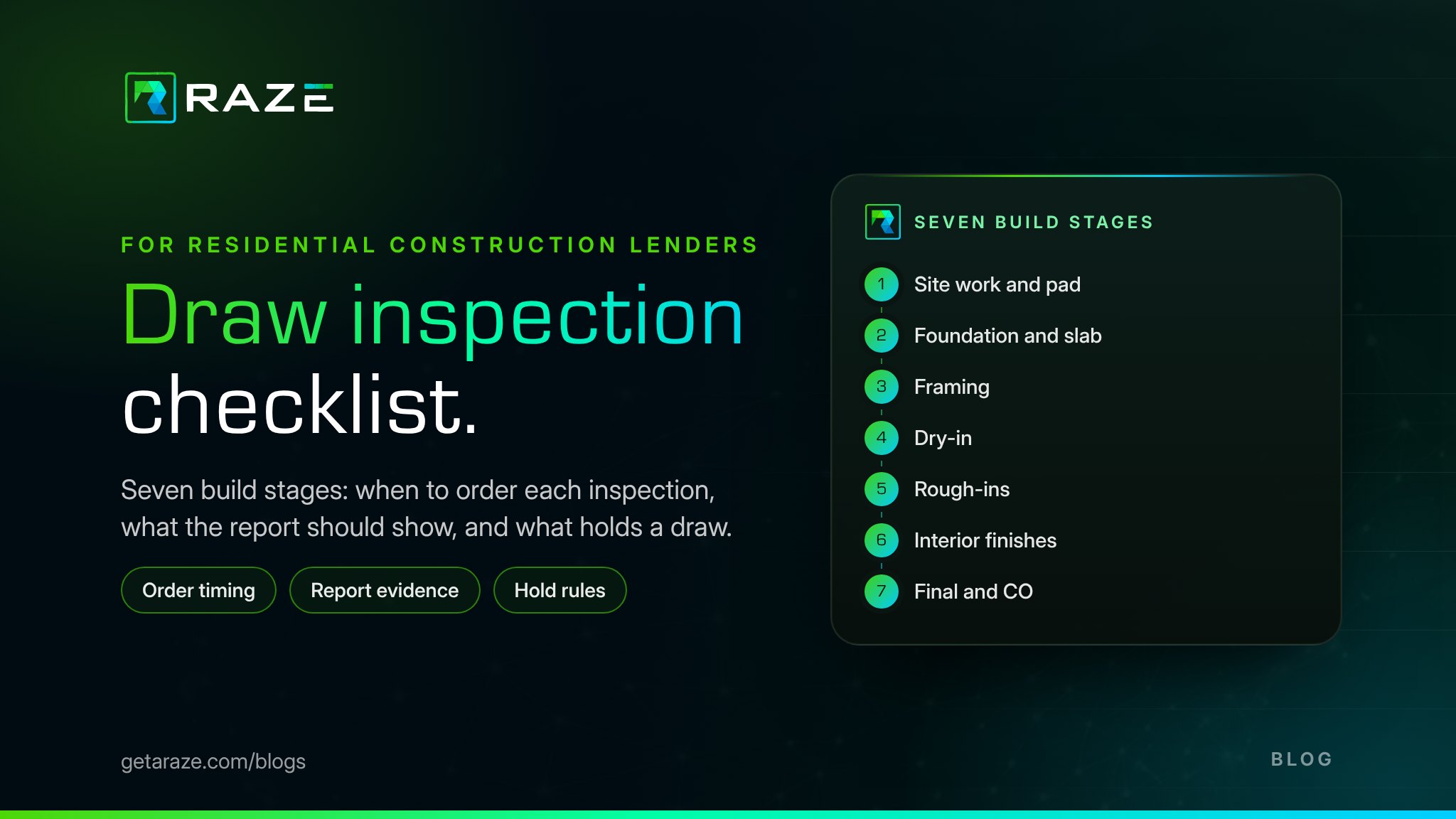
A residential draw inspection checklist answers three questions at every stage of the build: when to order the inspection, what the report has to show, and what should hold the draw. The inspector's side of each stage, what to look at on site, is in the draw inspection field guide. This checklist is the lender's side: the order, the evidence and the decision.
Seven stages, three questions each
Most residential builds move through the same seven stages, though a loan's draw schedule may fund four draws or eight and combine stages along the way. The loan agreement decides what each draw funds; the checklist below follows the sequence of construction.
Site work and pad
Order when: the pad is cleared, filled and at grade, before forms go up.
The report shows: the pad from each side, erosion control in place, the posted permit and, where state law requires one, the recorded notice of commencement.
Hold the draw if: no permit is posted or the pad does not match the site plan.
Foundation and slab
Order when: the slab is poured and before framing starts, while the slab edges and plumbing stub-ups are still visible.
The report shows: the footprint against the plans, the stub-ups, and any form board survey or termite treatment record your policy requires.
Hold the draw if: the footprint differs from the plans or a required record is missing.
Framing
Order when: walls are up and trusses are set and braced.
The report shows: every elevation, the roof structure, straps and ties, and window and door openings against the plans.
Hold the draw if: openings or the roof line differ from the plans, or framing billed as installed is still stacked on the lot.
Dry-in
Order when: the roof covering or sealed underlayment is on and windows and exterior doors are installed.
The report shows: each roof plane and each elevation with openings closed and the weather barrier complete.
Hold the draw if: the house is not closed to weather, because every interior draw that follows is exposed to water damage.
Rough-ins
Order when: electrical, plumbing and HVAC are roughed in, and before insulation and drywall. This is the stage where timing matters most: once the walls close, the work the draw pays for can no longer be photographed.
The report shows: each trade by line item, and any municipal rough inspection tags that are posted. A draw inspection documents progress; it does not certify code compliance.
Hold the draw if: the walls are already closed and nothing documents what is behind them. Accepting other evidence at that point is a policy decision, not an inspection result.
Interior finishes
Order when: finishes are complete enough to measure line by line: drywall, cabinets, counters, flooring, trim and fixtures.
The report shows: every room, percent complete for each budget line item, and materials delivered but not installed, recorded the way your stored-materials policy requires.
Hold the draw if: a line item is billed at 100 percent and the photos show it partly installed.
Final and certificate of occupancy
Order when: the certificate of occupancy is issued and the punch list is complete.
The report shows: the certificate, every elevation and room, and a clean site.
Hold the draw if: final lien waivers are not in hand. The NCUA's examiner guide expects lien waivers and releases from contractors, subcontractors and suppliers before the final draw and retainage are released.
What every stage has in common
Four things belong in every report, whatever the stage:
- Time- and location-stamped photos tied to the budget line items they support, not a loose album of the site.
- Percent complete by line item, set against what the draw request claims.
- Exceptions written down. A reviewer should never have to infer a problem from a photo.
- One template for every inspector, your staff and outside vendors alike, so a report from one county reads like a report from the next.
Supervisors look for the same discipline: the FDIC's construction lending examination procedures check that disbursements are made only after inspection reports, lien searches and title updates are reviewed. See what a draw inspection report includes for the full contents.
Turn the checklist into the template
A checklist on paper depends on every inspector remembering it. In RAZE, the lender's template carries the required photos, questions and line items, and the RAZE Mobile App walks the inspector through them on site, with time- and location-stamped photos linked to each line item. The report comes back in the same format whether your own inspector did the work through Direct Request or RAZE sent one through the Marketplace.
RAZE charges $125 per single-family inspection at any U.S. address when RAZE sends the inspector, or $25 per request when your own inspector does the work, so a seven-stage build costs the same in every county. The construction loan draw fees post shows where that line sits on the fee sheet.
Frequently asked questions
Build the checklist into every order
Your stages, your photos, your questions, in one template for every inspector.
For Lenders
See your checklist run on a project in your book, from order to delivered report.
Request a DemoThe Field Guide
The inspector's side of every stage, with the terms behind each checkpoint.
See the Field GuideEvery stage gets the same three questions,and every inspector returns the same report.
Put your checklist in every inspector's hands.
Request a Demo