Fix-and-Flip Loan Draws: An Inspection Policy
The purchase closes on Friday. By the next week the kitchen is gone, the walls are open and the borrower wants the first draw. The loan moves fast, and the property looks worse before it looks better.
The short question has its own page: how fix-and-flip lenders manage draws. This guide turns that process into a written inspection policy. Each lender sets its own terms in the loan documents; nothing here replaces them.
Why a flip needs its own rules
A fix-and-flip loan is short-term financing to acquire and renovate a property for resale. It is typically underwritten against after-repair value, the projected market value of the property once the renovations are complete, with a rehab draw component.
On a hard money loan the repair budget is usually released in draws after the work is verified, so the inspection is the record of the work in place behind each draw. It documents the work; it is not a valuation.
Four questions the policy answers
| The question | What to write | Why it matters |
|---|---|---|
| Who inspects | What to writeA third-party inspector, your own staff, or borrower photos under set rules | Why it mattersThe answer should depend on the draw and its risk, not on who is at the desk |
| When | What to writeBefore each release, against the lines in the request | Why it mattersThe lender funds what the report supports |
| What the report shows | What to writePercent complete on each budget line, with photos for each | Why it mattersA reviewer can compare the work with the amount requested |
| Where to look closer | What to writeEarly lines overstated, costs rising once demolition opens the walls, a stalled project that stops requesting draws | Why it mattersThese are the points where the holdback stops matching the job |
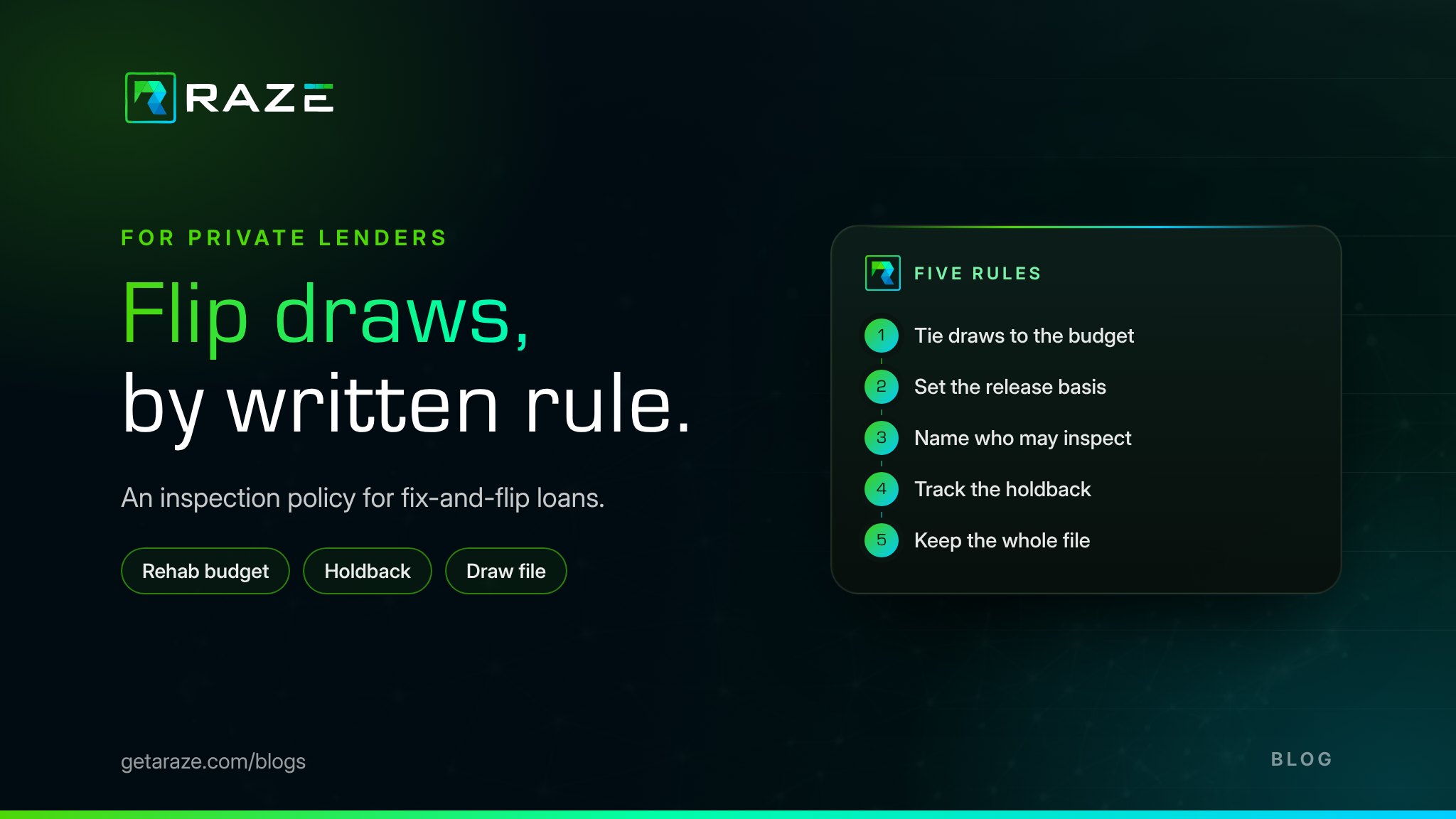
Five rules to write down
Tie every draw to the line-item budget
Break the scope of work into lines, such as demolition, roof, kitchen, baths and flooring, each with a dollar amount. Requests and inspections are measured against those lines. The rehab draw inspection answer covers what the visit documents.
Set the release basis
Say whether draws are paid after the work is done and whether any part of the first draw is advanced.
Name who may inspect
Decide which draws need a third-party inspector and which can use borrower-captured photos. The self-inspection guide covers how to draw that line.
Track the holdback against the work left
After each draw, compare what remains in the holdback with the work that remains on the budget.
Keep the whole file
Keep the request, the report, the photos and the funding record together for each draw. A complete file answers the questions an investor or loan buyer may ask later.
The loan documents set the terms.
The number of draws, the fees and the evidence required are set in the loan agreement. This guide describes a policy and does not suggest terms, rates or advance amounts. Have counsel review draw terms.
Where RAZE fits
Private lenders order draw inspections in the Ordering Engine and route them to their own inspectors through Direct Request or to a RAZE Marketplace inspector at any U.S. address. Photos carry GPS coordinates and date and time stamps and link to the draw sheet line items they support, and a rejected inspection keeps the reviewer's reason.
RAZE documents the work; the lender decides what to fund. See draw inspections for private lenders.
Frequently asked questions
Keep reading
One record for every rehab draw
See progress by line item, with photos tied to each line.
For Lenders
See a draw inspection on a project in your book, from order to delivered report.
Get StartedWrite the rules once.Read every draw against them.
Document the rehab before each release.
Get Started