Construction Loan Extensions: The Inspection Record
The loan matures in six weeks and the house is not finished. The builder asks for more time. Before anyone answers, the lender needs to know how far the house is, how fast it has been moving and what is left to build.
The short question has its own page: what happens if a construction loan matures before the house is finished. This guide covers what the inspection record adds to an extension decision. The loan documents govern extensions and default; nothing here is legal advice.
The terms behind an extension
A completion date covenant is a required project completion deadline in the loan agreement. Missing it can constitute default even if payments are current. A maturity default is a default that occurs when the loan reaches maturity without payoff or conversion, even if all payments were made on time.
An extension fee is a charge for extending the construction loan maturity when the project runs past the original term. Whether to extend, and on what terms, is the lender's decision under its loan documents.
What the inspection record shows
| The question | Where to look | What to look for |
|---|---|---|
| How far is the house? | Where to lookPercent complete by line on the latest report | What to look forThe lines still open and the photos behind them |
| Has it been moving? | Where to lookThe prior percent beside the current one, visit by visit | What to look forLines that have not changed between inspections |
| Has drawing stopped? | Where to lookThe dates of the last inspections and draw requests in the loan file | What to look forA stale draw: no draw activity for an extended period |
| What is left? | Where to lookPercent complete by line, read against the budget | What to look forThe lender's cost-to-complete beside the funds left to finish |
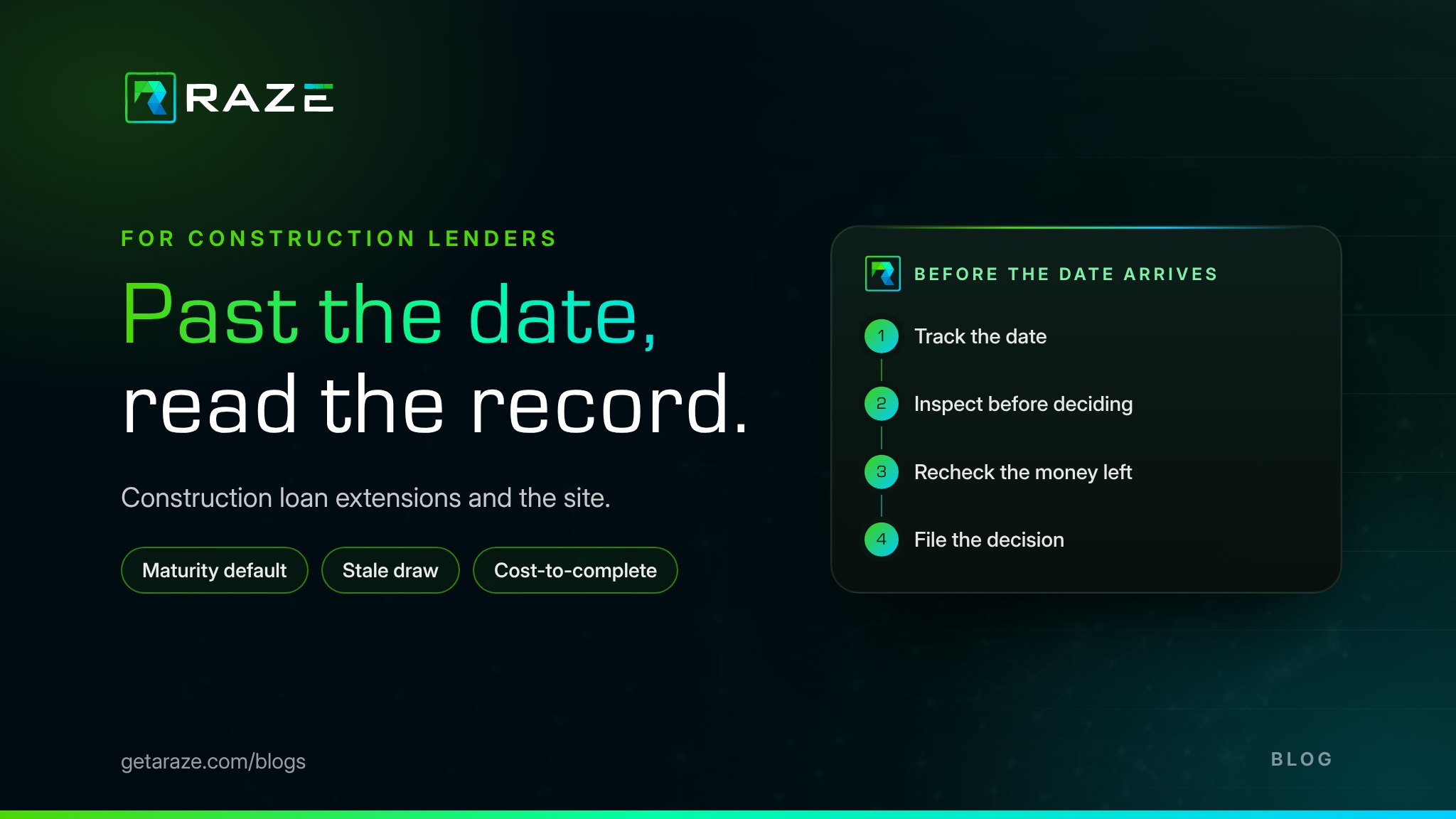
Before the date arrives
Track the date beside the draws
Keep the completion date and the maturity date where the draw desk can see them, so a slow project is noticed while there is still time to act.
Order an inspection before deciding
An extension request is a reason to see the site as it stands. A current report shows the work in place on the day of the decision.
Recheck the money left
Compare cost-to-complete with the funds left to finish. Compare the time left with the interest reserve left in the same review.
Put the record with the decision
File the request, the report and the decision together. The stalled loan guide covers the record when work has stopped.
The loan documents govern.
Whether a missed date is a default, what an extension costs and what the lender may require are set by the loan agreement. This guide covers the inspection record only. Confirm the rest with counsel.
Where RAZE fits
RAZE documents the work; the lender decides what follows. The lender sets the required questions and photos on each order in the Ordering Engine. The report comes back by line item, with each photo carrying GPS coordinates and date and time stamps and linked to the draw sheet line it supports. Each line shows the prior inspection's percent beside the current one.
RAZE does not approve, deny or fund draws, and it does not decide extensions.
Frequently asked questions
Keep reading
Know where every house stands
See progress by line item, with photos tied to each line.
For Lenders
See a draw inspection on a project in your book, from order to delivered report.
Get StartedSee the site first.Decide on the date second.
Know how far the house is before the date arrives.
Get Started